England manager Tuchel expresses dissatisfaction despite World Cup quarter-final win

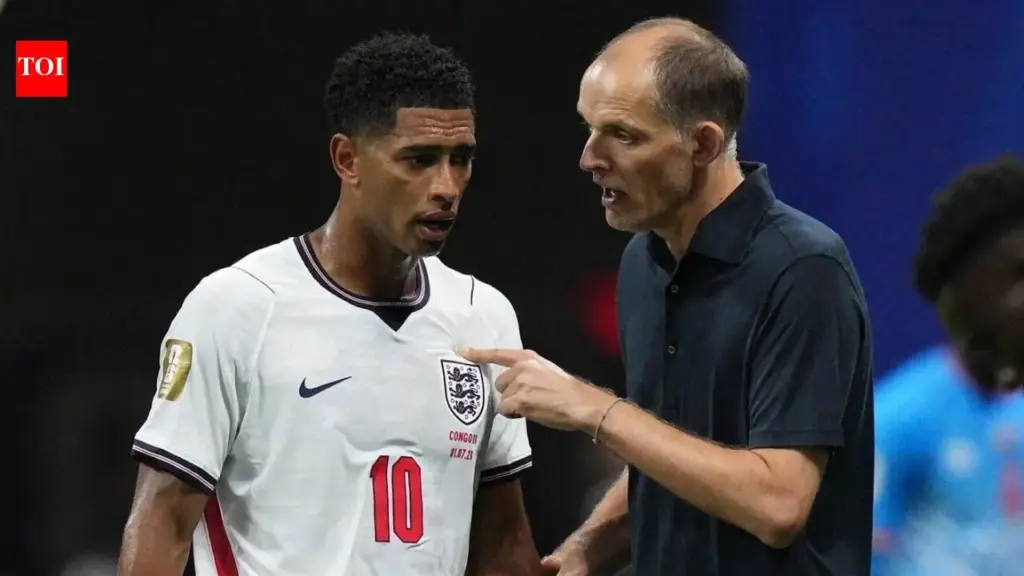
England manager Thomas Tuchel voiced his unhappiness with the team’s performance following their World Cup quarter-final victory against Norway. Despite securing a spot in the semi-finals, Tuchel stated, “The result is fantastic but I’m not happy with the performance.” He acknowledged the team’s effort, spirit, and belief in overcoming adversity but maintained that the team could play better, citing “sloppy, a lot of technical mistakes, not fast enough, not repetitive enough” play.
Jude Bellingham, who scored both goals in the 2-1 extra-time win, reacted to Tuchel’s comments with apparent frustration. When informed of his manager’s remarks, Bellingham responded with an eye roll and a comment of “whatever,” adding that it was a “tough shift” in difficult conditions. He suggested that Tuchel “doesn’t know what it takes to play in those conditions against Erling Haaland, Nusa, Sorloth,” referring to Norway‘s players, and emphasised that sometimes a team has to “win dirty” rather than always playing with a thousand passes.
Tuchel’s tactical expectations
Tuchel’s selection of the World Cup squad indicated a clear tactical approach, with players chosen for specific roles, such as Jude Bellingham and Morgan Rogers competing for the number 10 position. Key principles of this style include dominating possession, aggressive pressing, deliberate passes to draw out opposition pressure, and then accelerating play to find forwards in space. Against defensive blocks, the strategy involves attacking down the flanks using wide triangles and rotations to create opportunities.
The manager’s post-match critique largely focused on England‘s play on the ball. Norway defended in a 4-5-1 shape, while England attacked in a 3-2-5 formation. Tuchel likely desired longer periods of possession with short passes to draw Norway out, creating space for attackers out wide or through long balls over the top. This approach was seen in glimpses during the first quarter against Norway, with players like Elliot Anderson playing long passes to Noni Madueke on the far side after drawing defenders to one flank. However, this repetitive baiting of pressure diminished as the game progressed, with England‘s first-half possession of 68% dropping to 44% in the second half.
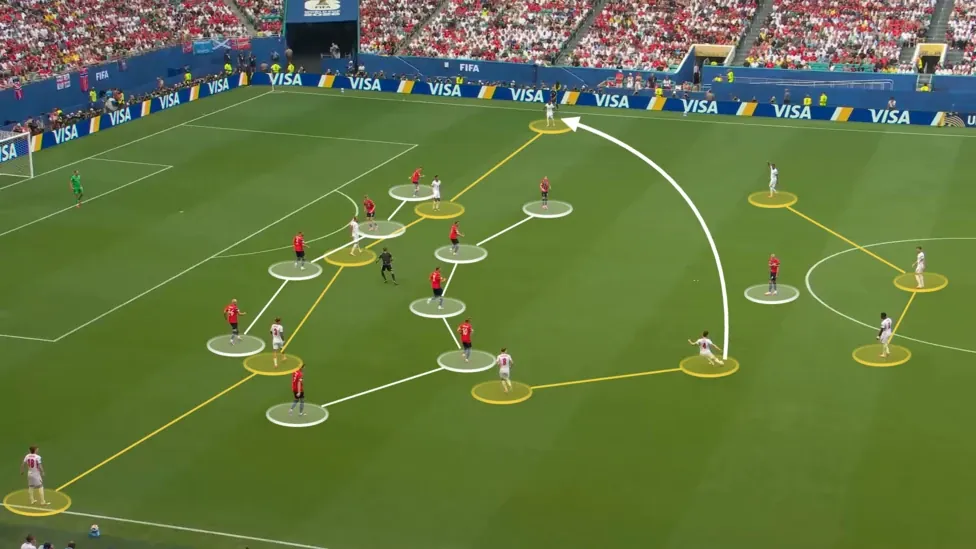
Tuchel’s frustration also stemmed from the team’s inability to fully utilise wide triangles, despite Norway‘s 4-5-1 setup offering ideal conditions for this tactic. Norway‘s wide midfielders maintained their positions rather than dropping into the defensive line, and their narrow back four created potential solutions for England through wide rotations. However, England was “not fast enough” to exploit these spaces. The zonal defending of Norway meant players were not man-marked, allowing England players to find free spaces if they moved quickly off the ball. Similar patterns had reportedly worked for Iraq and France against Norway.
Controversial goal and winning moments
One of England‘s goals against Norway was subject to controversy. Norway‘s goalkeeper, Ørjan Håskjold Nyland, launched a goal-kick that reportedly changed trajectory before reaching Elliot Anderson. Nyland and Norway‘s coaching staff, including manager Ståle Solbakken, believed the ball hit an overhead cable used for a robotic camera. Sander Berge, Norway‘s midfielder, called the incident “ridiculous.”
However, Fifa denied any foul play, stating that the sensor in the Connected Ball showed no peak in its “heartbeat” to indicate contact with an overhead wire. Thomas Tuchel also commented on the incident, noting that a chip in the ball should be able to detect even a slight touch. The goal stood, and Bellingham scored again in extra time, securing England‘s victory.
Despite Tuchel’s criticisms regarding performance, England found ways to win. For their first goal, Norway‘s defence was disorganised after Nyland‘s long goal-kick landed at Anderson‘s feet. Anderson‘s run committed Julian Ryerson, creating space for Anthony Gordon. This movement pulled Kristoffer Ajer and Sander Berge out of position, opening a central pass for Bellingham, who scored. This pattern of exploiting disorganised defences was also observed in England‘s opening goal against Mexico.
The winning goal against Norway also came from a moment of disorganisation, this time after a corner. Morgan Rogers‘ shot from distance was parried by Nyland, and Bellingham tapped it in. Bellingham highlighted the psychological aspect of the game, stating, “The game is split into loads of different facets – technical, tactical, and, the biggest one is psychological, managing adversity.”
Read Also
- Granit Xhaka expected to start for Switzerland against Argentina in World Cup quarterfinal
- India captain Shreyas Iyer discusses team's adaptation issues after series loss to England
- McGregor returns to Octagon for UFC 329 rematch against Holloway
- Argentina joins England, Spain, and France in World Cup semifinals
Source: bbc.com

